
Manufactured Home Loans in NC and SC: FHA, VA, USDA, and Conventional Financing Explained
By Keith Lopez Mortgage Loan Originator · NMLS #2814077 Reviewed by Keith Lopez
Quick answer
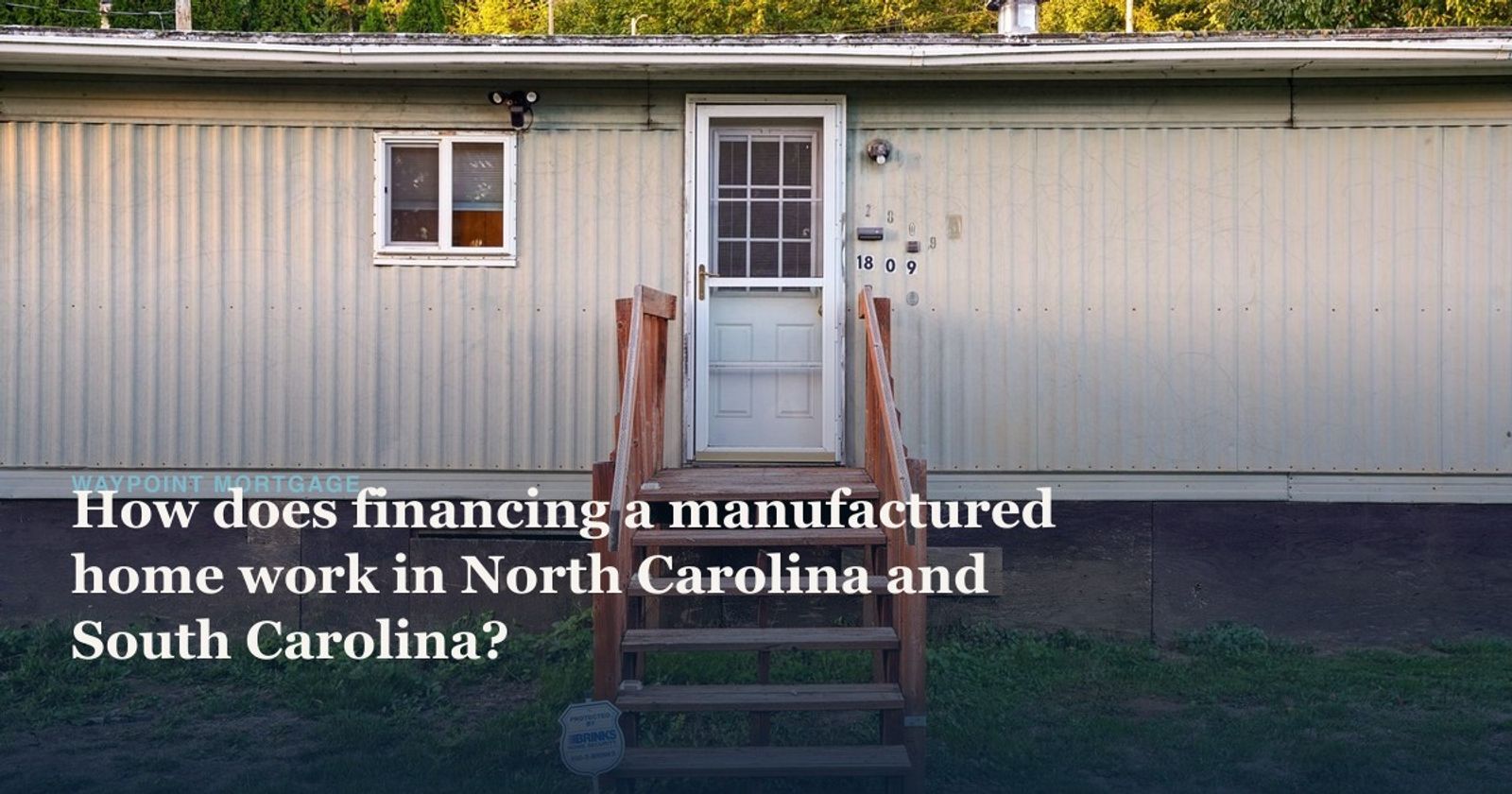
How does financing a manufactured home work in North Carolina and South Carolina?
Financing a manufactured home in NC or SC is possible through FHA, VA, USDA, and some conventional programs, but the home must meet specific requirements. It generally needs to be titled as real property, sit on a permanent foundation, and carry its original HUD certification tag and data plate. Chattel loans, which treat the home as personal property, follow a separate and often more limited set of rules.
- Most government-backed mortgage programs require the manufactured home to be permanently affixed to land and titled as real property, not personal property.
- The HUD certification tag and data plate are required documentation for FHA, VA, and USDA financing.
- Single-wide and double-wide homes may be treated differently depending on the loan program.
- Land ownership or a long-term land lease affects which programs you can use.
- Chattel loans cover homes on leased land or titled as personal property but typically carry different terms than real property mortgages.
- Working with a loan officer familiar with manufactured housing guidelines can help you identify which program fits your situation.
What Makes a Manufactured Home Different from a Modular or Site-Built Home?
A manufactured home is built entirely in a factory to the HUD Manufactured Home Construction and Safety Standards, commonly called the HUD Code, which took effect June 15, 1976. Homes built before that date are sometimes called mobile homes and are generally not eligible for government-backed mortgage financing.
A modular home, by contrast, is also factory-built but must meet local or state building codes, and it is typically titled and treated the same as a site-built home once it is set on a permanent foundation. Lenders and appraisers treat modular homes differently than manufactured homes, so it matters which category your home falls into.
The distinction affects appraisal methods, loan program eligibility, and the documentation a lender will request. Keith Lopez (NMLS #2814077) at Waypoint Mortgage can help you identify how your home is classified before you apply.
What Is the HUD Tag and Data Plate, and Why Do Lenders Require Them?
Every manufactured home built to HUD standards must display a small metal certification label, often called the HUD tag or HUD seal, on the exterior of each transportable section. This label confirms the home was inspected and meets federal safety and construction standards.
Inside the home, typically in a cabinet or on a bedroom wall, is the data plate. This document lists the manufacturer, the date of manufacture, the wind zone rating, the thermal zone, and other specifications. Lenders and appraisers use the data plate to verify the home meets the standards required for the loan program.
If the HUD tag is missing, FHA, VA, and USDA programs generally require the borrower to obtain a label verification letter from the Institute for Building Technology and Safety (IBTS), which maintains records for HUD. This process takes time, so identifying missing tags early in the purchase process is important.
What Does 'Titled as Real Property' Mean and Why Does It Matter?
When a manufactured home is placed on land that the owner also owns, and the home is permanently affixed to a foundation, most states allow the owner to retire the vehicle title and record the home as real property on the deed. In North Carolina and South Carolina, this process involves the county register of deeds and, in some cases, the DMV or motor vehicle division.
Once the home is titled as real property, it can be financed with a traditional mortgage, including FHA, VA, USDA, and some conventional programs. If the home still carries a vehicle or personal property title, it is generally only eligible for a chattel loan, which is a different product with its own qualification standards.
Buyers purchasing a manufactured home that has not yet been converted to real property should work with a real estate attorney early in the process. North Carolina and Georgia are attorney-closing states, meaning an attorney must handle the closing, and that attorney can also assist with the title conversion process.
How Do FHA Loans Work for Manufactured Homes?
The Federal Housing Administration insures loans on manufactured homes through its Title II program, which covers homes that are on a permanent foundation and titled as real property. FHA also has a Title I program that covers manufactured homes on leased land or titled as personal property, though Title I lenders are less common.
For a Title II FHA loan, the home must have been built after June 15, 1976, must have the HUD tag and data plate, must be on a permanent foundation meeting FHA guidelines, and must be the borrower's primary residence. The foundation must meet the requirements outlined in the HUD Permanent Foundations Guide for Manufactured Housing.
FHA loans allow lower down payments and more flexible credit guidelines than many conventional programs, which can make them a practical path for buyers who qualify. You can learn more about FHA financing at our FHA page. FHA does not set a maximum income limit for manufactured home loans under Title II.
Can VA or USDA Loans Be Used to Finance a Manufactured Home?
VA loans, backed by the U.S. Department of Veterans Affairs, can be used to purchase or refinance a manufactured home, but the home must be permanently affixed to a foundation, titled as real property, and meet VA's Minimum Property Requirements. The VA also requires that the home be a double-wide or larger in most cases, though lenders may have additional overlays. Eligible veterans and service members should confirm current VA guidelines with their loan officer.
USDA Rural Development loans, specifically the Single Family Housing Guaranteed Loan Program, can also finance manufactured homes in eligible rural areas of NC and SC. The home must be new or meet specific age and condition requirements, must be on a permanent foundation, and must be titled as real property. USDA has geographic eligibility maps that determine whether a property location qualifies. You can explore USDA and other rural financing options at our loan options page.
Both VA and USDA programs have specific lender overlays, meaning individual lenders may impose stricter requirements than the agency minimum. Not every lender who offers VA or USDA loans will also finance manufactured homes under those programs, so it is worth asking directly.
What About Conventional Loans and Single-Wide vs. Double-Wide Homes?
Fannie Mae and Freddie Mac both have guidelines for manufactured homes, but conventional financing for manufactured housing is more restrictive than for site-built homes. Fannie Mae's MH Advantage program offers improved terms for manufactured homes that meet specific design and feature standards, while the standard manufactured home program has different loan-to-value and reserve requirements.
Single-wide manufactured homes face more limited financing options across all programs. Many conventional lenders do not finance single-wides, and some government-backed programs have restrictions as well. Double-wide and multi-section homes generally have more program options available.
Conventional loans for manufactured homes also typically require the home to be titled as real property and on a permanent foundation. Appraisers must use comparable sales of other manufactured homes, not site-built homes, which can affect the appraised value in some markets.
What Is a Chattel Loan and When Does It Apply?
A chattel loan treats the manufactured home as personal property, similar to how an auto loan treats a vehicle. These loans are used when the home is on leased land, in a manufactured home community, or has not been converted to real property.
Chattel loans are not mortgages in the traditional sense. They are not backed by FHA, VA, or USDA, and they are not subject to the same federal consumer protections that apply to real property mortgages under the Truth in Lending Act's mortgage-specific rules. The Consumer Financial Protection Bureau (CFPB) has published research on the chattel loan market and the differences in consumer outcomes compared to real property mortgages.
If you are considering a home in a land-lease community, it is worth understanding whether you will have the option to convert to real property financing in the future, and what the lease terms mean for your long-term equity position. A loan officer can help you compare the total cost of chattel financing versus waiting to purchase a home on owned land.
What Are the Next Steps If You Are Considering a Manufactured Home Purchase?
Before you make an offer on a manufactured home, gather the following: the HUD tag number or certification label from each section, the data plate if accessible, the current title (to confirm whether it is real property or personal property), and information about the foundation type.
Your real estate agent and a licensed home inspector familiar with manufactured housing can help you assess the foundation and condition. In NC and SC, your closing attorney will handle the title work and can advise on the real property conversion process if needed.
Once you have that information, a Mortgage Strategy Session with Keith Lopez at Waypoint Mortgage can help you understand which loan programs you may qualify for based on your specific home, land situation, and financial profile. There is no obligation, and the goal is to give you a clear picture before you commit to a purchase contract.
Frequently asked questions
-
Does a manufactured home have to be on a permanent foundation to get a mortgage?
For most government-backed programs, including FHA Title II, VA, and USDA, yes. The home must be permanently affixed to a foundation that meets the relevant agency guidelines. Homes on non-permanent setups or in land-lease communities may only qualify for chattel financing, which is a different product than a traditional mortgage.
-
What is the difference between a HUD tag and a data plate?
The HUD tag is a small metal label attached to the exterior of each section of the home, confirming it was built to federal safety standards. The data plate is a paper document inside the home that lists the manufacturer, build date, wind zone, and other specifications. Lenders and appraisers need both to process most government-backed loan applications.
-
Can I use a VA loan to buy a manufactured home in North Carolina?
VA loans can be used for manufactured homes that are permanently affixed to a foundation, titled as real property, and meet VA Minimum Property Requirements. Most VA lenders require the home to be a double-wide or larger, though individual lender overlays vary. Eligible veterans should confirm current requirements with their loan officer before making an offer.
-
Are manufactured homes in rural NC or SC eligible for USDA financing?
Manufactured homes in USDA-eligible rural areas of NC and SC may qualify for the USDA Single Family Housing Guaranteed Loan Program if the home meets age, condition, foundation, and titling requirements. USDA maintains an online eligibility map to check whether a specific address qualifies. Not all USDA lenders finance manufactured homes, so ask directly.
-
Why is it harder to finance a single-wide manufactured home?
Single-wide homes have fewer financing options because many lenders and agencies view them as higher risk due to smaller size, lower resale demand, and more limited comparable sales data for appraisals. Some programs exclude single-wides entirely. Double-wide and multi-section homes generally have more program options available across FHA, VA, USDA, and conventional channels.
-
What is the difference between a chattel loan and a manufactured home mortgage?
A chattel loan treats the home as personal property and is used when the home is on leased land or has not been converted to real property. A manufactured home mortgage treats the home as real estate and is subject to federal mortgage regulations. Chattel loans are not backed by FHA, VA, or USDA, and they may have different terms and consumer protections than real property mortgages.
Related reading
- Loan Programs FHA Loan Limits in South Carolina for 2026, by County HUD set the 2026 FHA loan limit at $541,287 for most South Carolina counties, with higher limits in the Charleston and Hilton Head MSAs. See every county's figures and learn what the limit actually caps.
- Loan Programs Conventional Loan Down Payment Requirements in North Carolina Conventional loans in North Carolina allow down payments starting at 3% for eligible buyers, but the right amount depends on your savings, PMI tolerance, and cash-to-close budget. Here is what you need to know before you decide.
- Loan Programs FHA Loan Requirements in South Carolina: Credit, Down Payment, DTI, and More FHA loans in South Carolina require a 580 credit score for 3.5% down, allow back-end DTI up to 56% with automated approval, and must follow HUD property standards and SC attorney closing rules. Here is what buyers in Charleston, Greenville, and Columbia need to know.